What everyone should know about Ethiopia
Ethiopia is a country with one of the richest histories on the African continent, home to hospitable and friendly people descended from some of the world's oldest civilizations. This unique country has never been colonized by a foreign power, and its people have retained a strong cultural and religious identity.
Its capital, Addis Ababa, is the diplomatic capital of Africa and the third largest diplomatic hub in the world. It is home to the headquarters of the African Union and the United Nations Economic Commission for Africa, as well as other regional and international organizations.
In the rainforests of Ethiopia is the birthplace of Arabica coffee. The attractive coffee ceremony is enjoyed daily by locals and tourists.
Ethiopia is also believed to be the depository of the lost biblical Ark of the Covenant in St. Mary Zion Church in ancient Aksum.
Did you know that?
- Ethiopia is the 10th largest country in Africa.
- It is the second-most populous country in Africa after Nigeria and has almost 1.5% of the world's population.
- The Danakil Depression is more than 100 metres below sea level.
- Ras Dashen is the highest point at 4,620 metres.
- The Danakil Depression is one of the hottest places on Earth, with an average year-round temperature of 34.4 degrees Celsius.
- Ethiopia has upwards of 80 languages. English is the most commonly spoken foreign language, while Amharic, Oromo, Somali and Tigrinya are among the most widely spoken local languages.
- Ethiopia is one of just two African countries considered never to have been colonised.
- The Ethiopian Orthodox Church, known as Tewahedo, is one of the oldest forms of Christianity in the world and came to Ethiopia from Egypt.
- The Ethiopian year starts on 11 September of the Gregorian calendar, when New Year is celebrated.
- The Ethiopian calendar has 13 months. Its 13th month has five days, or six in a leap year.
- Except for the Arabs, Ethiopians are the only people in Africa who also use their own indigenous written alphabet.
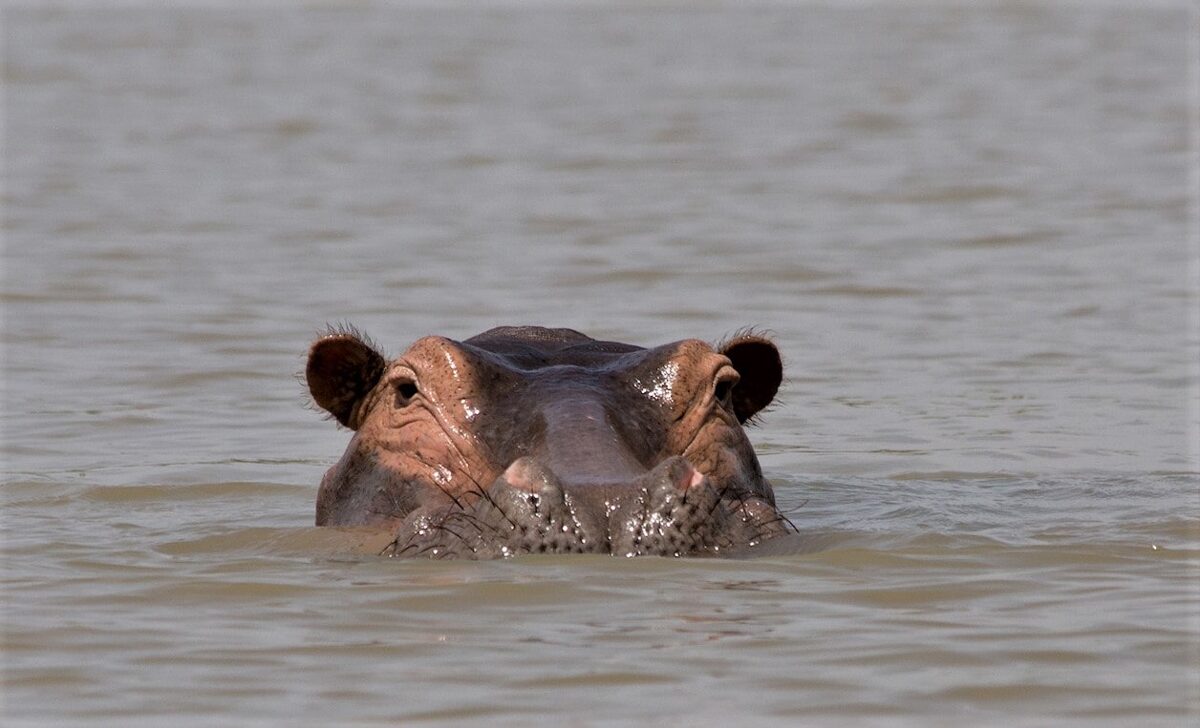
In Ethiopia there are many endemic animals and birds, popular birdwatching routes and opportunities for photography in the Omo Valley, home to ancient tribes.
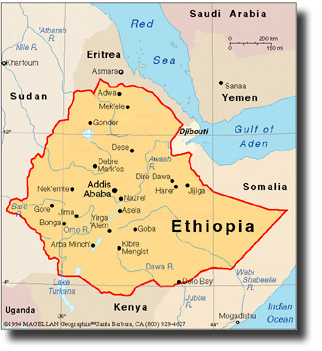
The most famous Ethiopian river is the Blue Nile or Abbay, which flows 1,450 kilometres from its source to join the White Nile at Khartoum. The Abyssinian Highlands run down the centre, with Sudanese grasslands to the west and Afar deserts to the east. South of Addis Ababa, the land is dominated by the Rift Valley lakes.
Time zone
Ethiopia is in the GMT+3 time zone. Ethiopia also has its own time system, based on roughly 12 hours of daylight starting at 6:00 am and 12 hours of darkness starting at 6:00 pm. Urban Ethiopians often use both systems, so it is worth checking which system is being used.
Weather
There are two seasons in Ethiopia:
- In most of the country the dry season prevails from October until May, with short rains in March.
- The wet season runs from June until the end of September.
In the Omo and Mago National Parks in Southern Ethiopia, the seasons are different, with the main rains from March to June and shorter rains in November.
Travel to Ethiopia is an adventure and a chance to discover a beautiful country, with a unique combination of history, tradition, culture and nature.